
Ottoman Urban Wealth Inequalities
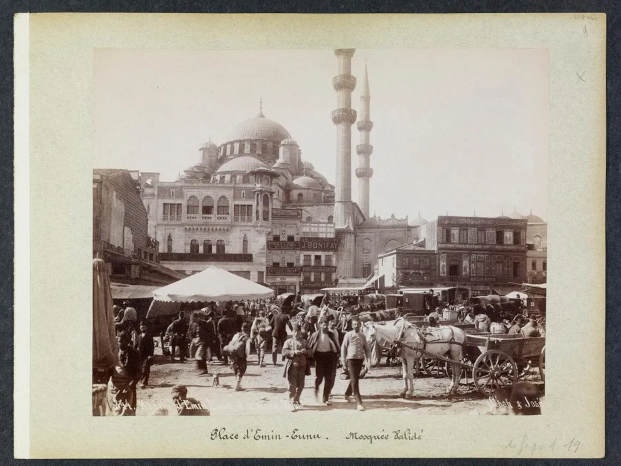 The study of long-term house prices has gained momentum in the economics literature in recent years as real estate is one of the key components of household wealth. Many studies point out that there is a multidirectional link between house prices and the wider economy through money and credit channels. However, the economic history literature offers a limited insight into historical house prices and their determinants because of difficulty in constructing long-term price indices. Similarly, the Ottoman historiography is not concerned with offering a systematic analysis of house prices in the Ottoman cities, instead is engaged in their social and cultural analysis. The original value of this project is to conduct a comparative analysis of the house prices in the Ottoman empire by using Ottoman archival documents and econometric methods. Based on our experience of eighteenth-century Edirne, we will investigate house prices and urban wealth inequality in ten major Ottoman cities within the borders of Modern Turkey in 1600-1913.
The method of the Project can be summarised under two headings: data collection and data analysis. The data of the Project will be based on the house sale records from the Muslim court registers, which contain coherent information on house prices, their physical attributes and location, buyer and seller characteristics and contractual characteristics. We choose a sampling strategy that enables us to do both cross-sectional and time series analysis. First, we will identify benchmark years and rely on the full set of transactions for these years. We will then compile a second sample consisting of randomly selected sales from each month for every available volume in the archives. With the combined sample we will estimate a real hedonic price index. And by using the cross-sectional sample we will estimate urban wealth inequality approximated by coefficient of variation of house prices. We will then use the measure of urban wealth inequality as dependent variable to estimate its determinants.
The findings of the project will be disseminated through two mechanisms: a working paper prepared for an international peer-reviewed field journal and an interactive website. The former will be presented in national and international seminars and conferences. The website will primarily target the public who may be interested in urban history. The social and cultural impact will be achieved through website and its promotion via social media. The long-term economic impact is expected as providing policy makers, such as the Central Bank, reliable long-term historical statistics on housing market. In the long term, the project will contribute to the career of young economic historians who will work for the project as research assistant. Finally, by using our experience in this project we plan to put forward a major grant application to ERC or ESRC.